
Cluff Brothers Drilling · Southern Utah & Arizona
What Happens When You Drill With Us
From the first property details to the work that follows drilling, know what to prepare, what to ask and which decisions need to be made together.
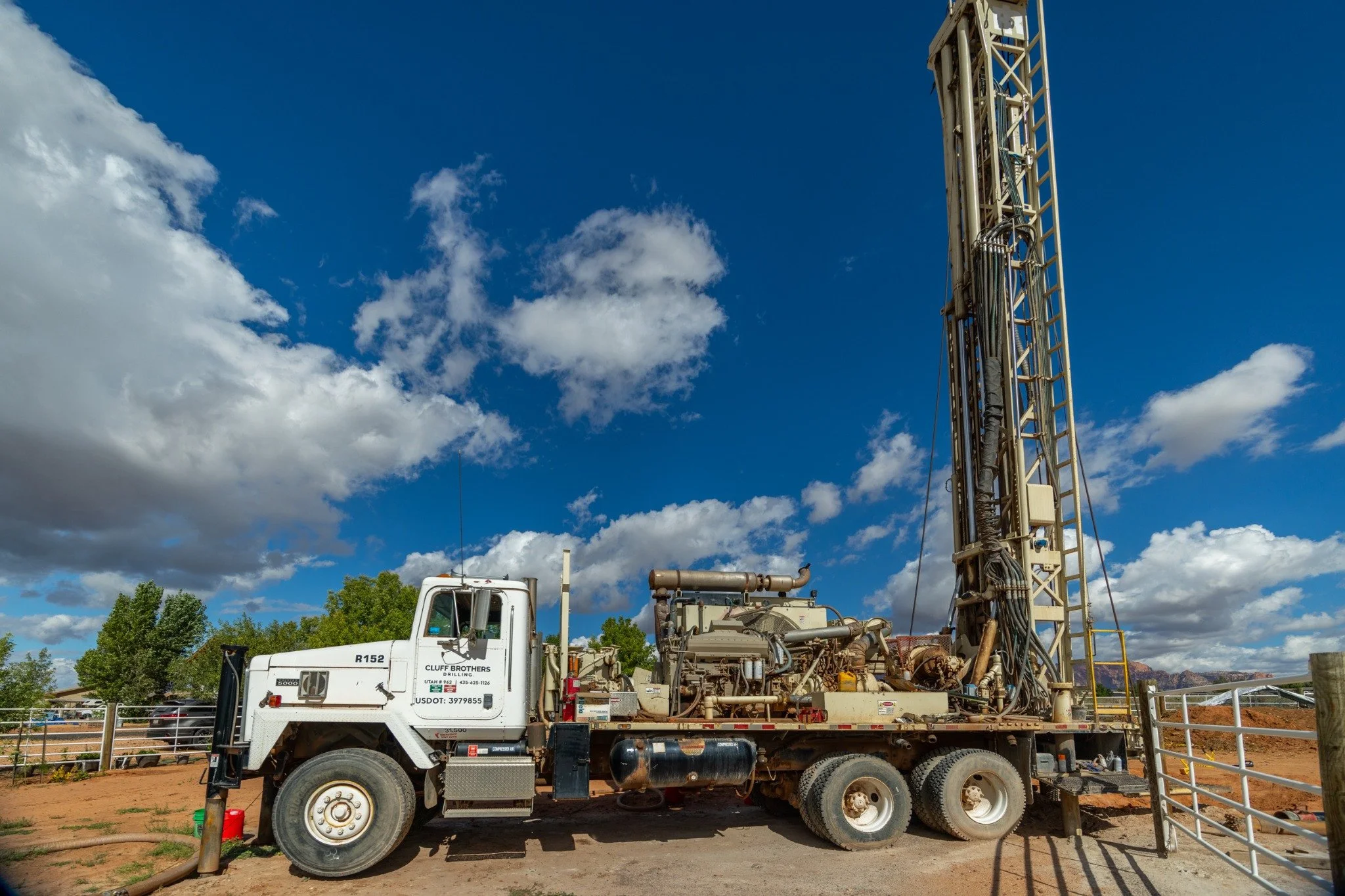
A practical guide for property owners
A clear plan starts before the rig arrives.
Josh Cluff brings nearly three decades of drilling experience to Cluff Brothers Drilling. Your project still starts with the details of your property: its location, intended water use, access and available records. This guide lays out the conversations to have along the way. The exact sequence and responsibilities should be confirmed for your project.
From inquiry to next steps
Six stages to work through.
Tell us about the property.
Start with the address or parcel number, county and state. Explain what the water will serve: a home, livestock, irrigation, a business or more than one use. For an existing well, include its log, available records and what has changed.
Send what you have. A location pin, access photos and a short description of the project are useful even when some records are missing.
Confirm together: Which information is still needed, whether the project is within our service area and what the next conversation should cover.
Work through the site details.
The proposed well location needs to fit the property and be reachable by drilling equipment. Show the house, wastewater facilities, utilities, access road and planned improvements on the same site sketch. Include gates, turns, grades and overhead obstacles in access photos.
Available well records can inform the discussion, but a nearby well does not promise the same depth, production or water quality on your parcel.
Confirm together: What can be reviewed from your records and photos, whether a site visit is needed, and which location or access questions need to be resolved.
Put the scope in writing.
Before committing to the work, understand the proposed well construction, pricing assumptions and exclusions. Ask how additional depth or changed conditions would affect the scope, and who must approve a change.
Identify responsibilities for approvals, site preparation and the work beyond drilling. Pumps, electrical work, water lines, storage, treatment and testing should each be addressed rather than assumed to be included.
Confirm together: What the estimate includes, what remains separate, and how decisions and changes will be communicated.
Confirm readiness and scheduling.
A preferred date is useful context; it is not a confirmed drilling appointment. Explain what drives your timing, such as a home build, irrigation season or an existing supply problem. Confirm the applicable approvals and agreed site preparations before work is scheduled.
Keep the access route and setup area available. Discuss any grading, clearing, gate changes or other preparation before arranging it, so you do not spend money preparing the wrong area.
Confirm together: The start arrangements, site contact, equipment access and any outstanding items that could affect readiness.
Understand the decisions during drilling.
Ground conditions and the water-bearing formations encountered can affect the work. An estimated depth is a planning assumption, not a guaranteed result. Discuss in advance how you will be contacted if a decision is needed about continuing, changing the plan or stopping.
Keep people, pets and unrelated activity clear of the work area. If you want to observe, first ask the crew where it is appropriate to be and when it is safe to approach.
Confirm together: Who can authorize changes, how they will be documented and what information you will receive when a decision is needed.
Close out the drilling work and plan what follows.
Before treating the project as finished, review the work completed and the records you should keep. Confirm which well-construction documents, location information and any project-specific results will be available, and who will provide them.
A drilled well is one part of a working water supply. Clarify the remaining equipment, power, distribution and water-quality work for your intended use. The rig leaving does not, by itself, mean water is ready at the house.
Confirm together: What has been completed, what is still outstanding and who is responsible for each remaining step.
Before your first conversation
Bring the information that makes the discussion useful.
- Property address or parcel number, county, state and a location pin.
- All intended water uses, including future plans that may affect the project.
- Available approvals, water-right information or existing well records.
- A site sketch and photos of the entrance, access route and proposed well area.
- Your target timing, what drives it and which other work is still pending.
Before, during & after
Questions about the process.
Use these answers to prepare for the conversation, then confirm the arrangements for your property with the team.
Do I need every document before I contact you?
No. Start with the property location, intended use and whether this is a new or existing well. Send the records you have and identify what is missing. A useful first inquiry separates known facts from open questions; there is no need to guess a depth, approval status or technical specification to fill the gaps.
Does requesting an estimate reserve a drilling date?
No. An inquiry starts the conversation. Scheduling depends on the agreed project, readiness and availability. Tell us about your target date and why it matters, then confirm the actual arrangements directly with the team. Avoid coordinating other contractors around a date that has not been agreed.
Should I clear a pad or widen the entrance first?
Discuss the proposed location and access before paying for site work. Share photos showing the route from the road to the well area, including gates, turns, slopes and overhead obstacles. Confirm what preparation is needed and who will do it. A route that works for a pickup is not automatically suitable for drilling equipment.
Who handles permits, water rights and other approvals?
Confirm responsibility for each approval in the project discussion and written scope. Requirements depend on the property and proposed use. Do not assume that a drilling estimate includes obtaining approvals, or that owning the land completes the approval process. Bring any existing documents so unresolved items can be identified before scheduling.
What happens if the work needs to go beyond the estimate?
Agree on that process before drilling starts. Ask which assumptions the price uses, what would trigger a revised scope, how additional work would be priced and who is authorized to approve it. Keep a reliable contact available for decisions. A clear change process is more useful than treating an estimated depth as a promise that conditions cannot change.
Can I watch the drilling or be away from the property?
Discuss attendance and access with the team before the work begins. Ask who needs to be reachable, how the crew will enter and where visitors may safely stand. Do not enter the equipment area or approach operating machinery without direction. If you will be away, make sure the agreed decision-maker and site contact can be reached.
Will I have usable water as soon as drilling is finished?
Do not assume so. Well construction, the equipment that delivers water and evaluation of the supply are separate parts of the project. Confirm responsibility for the pump, electrical connection, piping, storage and any appropriate water-quality work. The written scope should make clear which remaining steps must be completed before the property relies on the supply.
How should I plan if my existing well still supplies the property?
Explain how the current well is used and whether there is another available supply. Provide its records and describe the reason for considering new drilling. Discuss how any interruption will be managed and what must happen to the old well. Do not disconnect or abandon the existing supply based only on a proposed replacement date.
What should I keep after the project?
Keep the written scope and approved changes, relevant approvals, final well-construction record and precise location information. Retain any production or laboratory results actually obtained, plus records from the contractors completing the rest of the system. Ask who supplies each document and when, so future repairs or ownership changes do not start with missing information.
Keep planning
A closer look at preparation, depth and cost.
Your property. Your next step.
Tell us what you are planning.
Send your location, intended water use and the questions you want to work through. Start with the details you have.